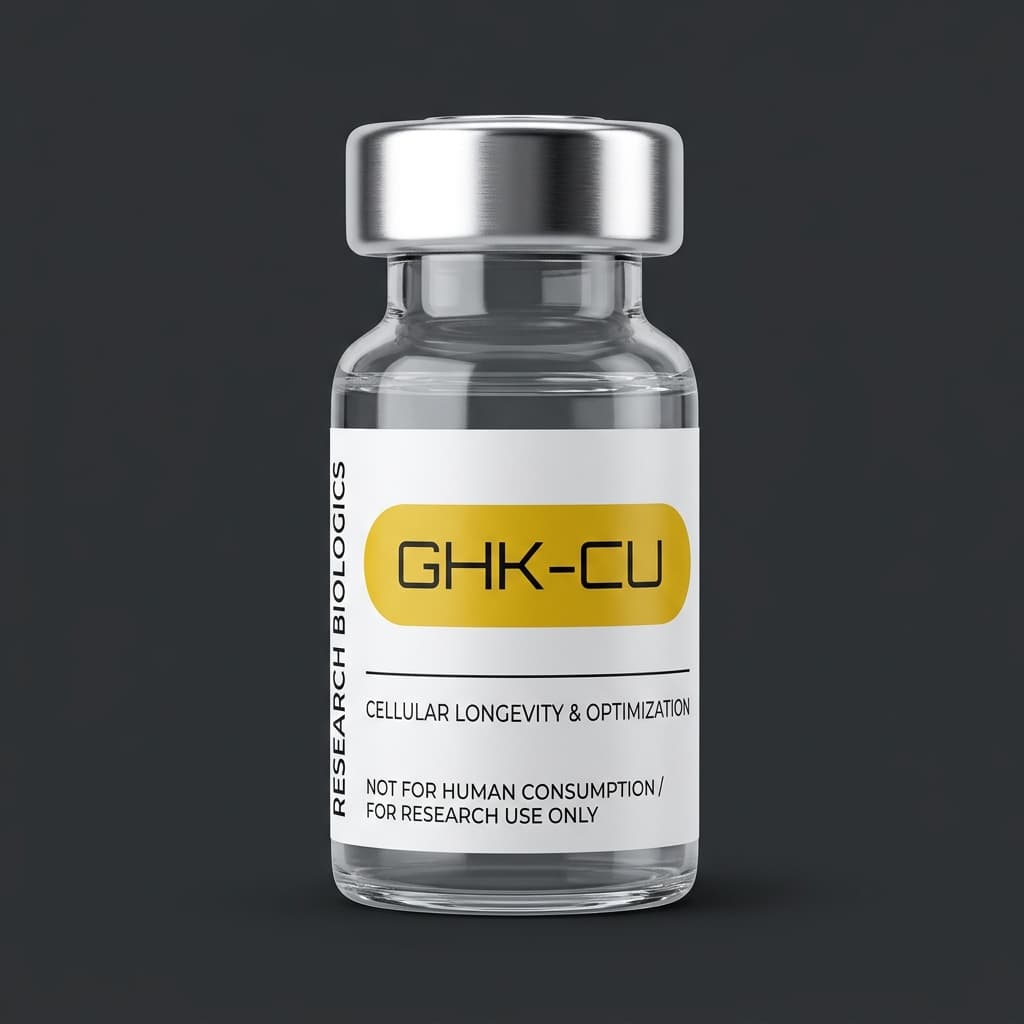
GHK-CU
Copper peptide that reverses skin aging and rebuilds collagen at depth.
## Description of GHK-Cu The human copper-binding peptide GHK-Cu (glycyl-l-histidyl-l-lysine) is a naturally occurring tri-peptide found in human plasma and released from tissues during injury. Discovered in 1973, GHK-Cu has established itself as a powerful protective and regenerative ingredient, widely used in skin and hair products. GHK-Cu tightens loose skin, repairs protective skin barrier proteins, and improves skin firmness, elasticity, and clarity. It reduces fine lines, wrinkles, and photodamage, and smooths rough skin. Additionally, GHK-Cu stimulates wound healing, protects skin cells from UV radiation, reduces inflammation and free radical damage, and enhances hair growth and thickness. Its effects are largely attributed to its ability to bind copper(II) ions, playing a crucial role in copper metabolism. Recent research, utilizing the Connectivity Map from the Broad Institute, has shown that GHK-Cu can up- and down-regulate numerous human genes, linking its biological effects to changes in gene expression. Further research on GHK-Cu reveals its presence in human blood plasma, urine, and saliva. Animal studies indicate that GHK-Cu can significantly enhance wound healing, immune function, and skin health by stimulating collagen production, promoting blood vessel growth, and supporting fibroblast activity. Now we would like to bring you closer to the effects of the peptide, which have been researched and confirmed in studies. [3] ## Research Confirmed Effects ## 1. GHK-Cu and Skin Healing GHK-Cu (glycyl-L-histidyl-L-lysine copper complex) is a naturally occurring peptide in human plasma, saliva, and urine that declines with age. Known for its powerful protective and regenerative properties, GHK-Cu accelerates wound healing and skin repair by stimulating the synthesis and breakdown of collagen, glycosaminoglycans, and other extracellular matrix components. It modulates the activity of metalloproteinases and their inhibitors, promoting the healing of various tissues such as skin, hair follicles, and bones. In cosmetic products, GHK-Cu is effective in tightening loose skin, improving elasticity and firmness, reducing fine lines, wrinkles, and hyperpigmentation, and enhancing overall skin appearance. Additionally, it has therapeutic potential for conditions like skin inflammation, chronic obstructive pulmonary disease, and metastatic colon cancer, owing to its ability to regulate thousands of human genes, essentially resetting DNA to a healthier state. Recent studies have highlighted GHK-Cu's role in modulating key growth factors involved in wound healing and skin regeneration. Transforming growth factor β (TGF-β) and insulin growth factor (IGF) are crucial in these processes, with GHK-Cu shown to decrease IGF-2-dependent TGF-β1 secretion in dermal fibroblasts, potentially preventing hypertrophic scar formation. Furthermore, GHK-Cu encapsulated in liposomes has been demonstrated to accelerate scald wound healing in mice by promoting cell proliferation and angiogenesis, enhancing the expression of vascular endothelial growth factor and fibroblast growth factors, and improving the overall healing process. These findings underscore the peptide's potential as a powerful therapeutic agent in skin regeneration and wound healing applications. [1] - [4] ## 2. GHK-Cu and Bacteria In vitro studies have highlighted the promising antimicrobial activity of Gly-His-Lys conjugates for potential therapeutic use in skin and tissue infections. These studies explored novel compounds, including fatty acid conjugates with modified Gly-His-Lys sequences. The antimicrobial efficacy of these compounds ranged from strong to moderate. Notably, compound 1d exhibited the most potent activity against Escherichia coli and Staphylococcus aureus with MIC ranges of 31.3–125.0 μg/mL and against Pseudomonas aeruginosa with MIC ranges of 375.0–500.0 μg/mL. Conjugate 5b showed significant activity against Staphylococcus aureus and Escherichia coli at MIC ranges of 250.0–500.0 μg/mL and 62.5–125.0 μg/mL, respectively. Both 1d and 5b demonstrated rapid bactericidal effects against Gram-positive bacteria. Additionally, compounds 1d, 1e, and 2e showed notable antifungal activity. A multicenter, randomized, evaluator-blinded, placebo-controlled clinical study evaluated the effectiveness of the glycyl-L-histidyl-L-lysine copper complex (lamin Gel) in treating diabetic neuropathic ulcers. Patients adhered to a standardized wound care protocol, including sharp debridement, daily drug application, pressure-relieving footwear, and diabetes management education. Treatment with lamin Gel significantly improved ulcer closure rates, achieving a median area closure of 98.5% compared to 60.8% for the control group. The rate of closure was three times faster with lamin Gel, particularly for larger ulcers (greater than 100 mm²), which showed an 89.2% closure compared to -10.3% for the control. Immediate treatment post-debridement was crucial for optimal results. Additionally, the incidence of ulcer infections was significantly lower in the lamin Gel group (7%) compared to the control (34%). An experimental study on the effects of topical glycyl-L-histidyl-L-lysine tripeptide-copper complex (TCC) on ischemic open wounds in rats further supported the benefits of GHK-Cu. Rats treated with TCC showed a significant decrease in wound area compared to control and vehicle groups. By day 13, the TCC group exhibited a 64.5% reduction in wound area, outperforming the vehicle (45.6%) and control (28.2%) groups. TCC-treated wounds also had significantly lower concentrations of TNF-alpha and MMP-2 and MMP-9, indicating reduced inflammation and enhanced healing. These findings suggest that TCC could be an effective treatment for chronic wounds in various species, including humans. Overall, GHK-Cu has shown superior results in treating diabetic ulcers and ischemic open wounds compared to standard care alone. Its combination with certain fatty acids creates a potent antimicrobial compound effective against bacteria and fungi, potentially reducing infection rates and accelerating wound healing. These findings warrant further clinical evaluation of GHK-Cu for broader therapeutic applications in wound care. [5] - [7] ## 3. GHK-Cu in Cognition and Nervous System Neurodegeneration, characterized by the progressive death of neurons and cognitive decline, is a growing concern among senior populations, with limited effective therapies available. One potential therapeutic agent is the human peptide GHK (glycyl-L-histidyl-L-lysine), a copper-binding peptide known for its diverse biological actions that counteract aging-related diseases and conditions. GHK has shown health-promoting effects on various tissues, including chondrocytes, liver cells, and human fibroblasts. Importantly, studies using the Broad Institute Connectivity Map have demonstrated that GHK can modulate gene expression, resetting pathological patterns to healthier states. In research focused on the nervous system, GHK has demonstrated neuroprotective effects against neurodegenerative diseases and improved tissue regeneration. A study on rats with intracerebral hemorrhage (ICH) revealed that GHK pretreatment significantly improved neurological deficits, reduced brain water content, and inhibited neuronal apoptosis. The peptide's effects were mediated through the downregulation of miR-339-5p expression, which was found to be part of the p38 MAPK pathway. Additionally, GHK's influence on the miR-339-5p/VEGFA axis played a crucial role in preventing neuronal apoptosis following ICH injury. These findings suggest that GHK could represent a novel therapeutic strategy for conditions like ICH. GHK-Cu, a variant of the peptide found in high concentrations in the brain, has been studied for its ability to counteract age-associated decline in neuron function. Research indicates that GHK-Cu improves angiogenesis in the nervous system, enhances nerve outgrowth, and reduces central nervous system inflammation. It appears to reset pathological gene expression, helping to restore health in dysfunctional systems. In rat models, GHK-Cu's neuroprotective effects were evident through improved neurological deficits, reduced brain swelling, and inhibition of neuron death. These effects were particularly notable in the context of overexpression of miR-339-5p following brain injuries such as bleeds and strokes, underscoring GHK-Cu's potential as a protective agent against neurodegeneration. [8], [9] ## 4. GHK-Cu and Side Effects of Chemotherapy GHK peptide shows promise in inhibiting bleomycin-induced pulmonary fibrosis in mice by suppressing the TGF-β1/Smad-mediated epithelial-to-mesenchymal transition (EMT). Pulmonary fibrosis, an irreversible and progressive lung disease, lacks effective treatments. It occurs after therapy with bleomycin – cancer drug. GHK, a tripeptide known for its role in tissue regeneration and wound healing, was tested for its effects on bleomycin-induced fibrosis. Mice were administered GHK intraperitoneally at various doses following bleomycin instillation. Results demonstrated that GHK treatment reduced inflammatory cell infiltration, improved collagen deposition, and balanced MMP-9/TIMP-1 levels. It also decreased TNF-α, IL-6 in bronchoalveolar lavage fluid, and myeloperoxidase activity in lung extracts. GHK further inhibited TGF-β1, p-Smad2, p-Smad3, and IGF-1 expression, indicating its potential as a treatment for pulmonary fibrosis by targeting the TGF-β1/Smad 2/3 and IGF-1 pathways. GHK-Cu, the copper-bound form of the peptide, also exhibits protective effects against lipopolysaccharide (LPS)-induced acute lung injury (ALI) in mice. GHK-Cu treatment reduced reactive oxygen species (ROS) production, increased superoxide dismutase (SOD) activity, and decreased TNF-α and IL-6 production by inhibiting NF-κB p65 and p38 MAPK signaling in LPS-induced macrophages and ALI models. This treatment alleviated lung histological alterations and suppressed inflammatory cell infiltration, demonstrating GHK-Cu's potential as a novel therapeutic approach for ALI and acute respiratory distress syndrome (ARDS) by mitigating excessive inflammatory responses. Research highlights the efficacy of GHK-Cu in protecting lungs from fibrosis following bleomycin therapy, suggesting its use as a chemotherapy adjuvant to increase medication doses without exacerbating side effects. GHK-Cu regulates inflammatory molecules TNF-α and IL-6, preventing fibrotic remodeling and improving collagen deposition in the lungs. Similarly, GHK-Cu showed benefits in mouse models of ARDS, reducing TNF-α and IL-6 expression, and offering a protective effect against this rapid and potentially fatal inflammatory lung condition. These findings support GHK-Cu's potential therapeutic application in treating various lung injuries and diseases. [10], [11] ## 5. GHK-Cu and Pain Reduction GHK-Cu exhibits promising analgesic and anti-aggressive effects in rat models, particularly in response to pain-induced aggressive-defensive behavior. Administered intraperitoneally in doses ranging from 5 to 150 μg/kg, GHK-Cu demonstrated significant pain relief and reduction in aggressive behavior in a foot-shock model. The key to these effects lies in the L-lysine residue within the GHK peptide, as similar analgesic and anti-aggressive effects were observed with L-lysine administration at equivalent doses. Furthermore, the peptide's efficacy extends to interactions with L-arginine, another amino acid with analgesic properties. Research has shown that combining arginine with glyprolines to form specific peptides can produce intrinsic regulatory effects on pain and aggression. This suggests that GHK-Cu and related peptides could be developed as non-addictive alternatives to opiate medications and NSAIDs, which are known for their potential side effects, including negative impacts on cardiovascular health. These findings highlight the therapeutic potential of GHK-Cu in pain management, offering a new avenue for developing safer pain relief options. [12], [13] ## References L. Pickart, J. M. Vasquez-Soltero, and A. Margolina, “GHK Peptide as a Natural Modulator of Multiple Cellular Pathways in Skin Regeneration,” BioMed Res. Int., vol. 2015, p. 648108, 2015. [BioMed Research International] A. Gruchlik, E. Chodurek, and Z. Dzierzewicz, “Effect of GLY-HIS-LYS and its copper complex on TGF-β secretion in normal human dermal fibroblasts,” Acta Pol. Pharm., vol. 71, no. 6, pp. 954–958, Dec. 2014. [PubMed] L. Pickart and A. Margolina, “Regenerative and Protective Actions of the GHK-Cu Peptide in the Light of the New Gene Data,” Int. J. Mol. Sci., vol. 19, no. 7, Jul. 2018. [PubMed] X. Wang et al., “GHK-Cu-liposomes accelerate scald wound healing in mice by promoting cell proliferation and angiogenesis,” Wound Repair Regen. Off. Publ. Wound Heal. Soc. Eur. Tissue Repair Soc., vol. 25, no. 2, pp. 270–278, 2017. [PubMed] M. Kukowska, M. Kukowska-Kaszuba, and K. Dzierzbicka, “In vitro studies of antimicrobial activity of Gly-His-Lys conjugates as potential and promising candidates for therapeutics in skin and tissue infections,” Bioorg. Med. Chem. Lett., vol. 25, no. 3, pp. 542–546, Feb. 2015. [Science Direct] G. D. Mulder et al., “Enhanced healing of ulcers in patients with diabetes by topical treatment with glycyl-l-histidyl-l-lysine copper,” Wound Repair Regen. Off. Publ. Wound Heal. Soc. Eur. Tissue Repair Soc., vol. 2, no. 4, pp. 259–269, Oct. 1994. [PubMed] S. O. Canapp et al., “The effect of topical tripeptide-copper complex on healing of ischemic open wounds,” Vet. Surg. VS, vol. 32, no. 6, pp. 515–523, Dec. 2003. [PubMed] L. Pickart, J. M. Vasquez-Soltero, and A. Margolina, “The Effect of the Human Peptide GHK on Gene Expression Relevant to Nervous System Function and Cognitive Decline,” Brain Sci., vol. 7, no. 2, Feb. 2017. [PubMed] H. Zhang, Y. Wang, and Z. He, “Glycine-Histidine-Lysine (GHK) Alleviates Neuronal Apoptosis Due to Intracerebral Hemorrhage via the miR-339-5p/VEGFA Pathway,” Front. Neurosci., vol. 12, p. 644, 2018. [PubMed] X.-M. Zhou et al., “GHK Peptide Inhibits Bleomycin-Induced Pulmonary Fibrosis in Mice by Suppressing TGFβ1/Smad-Mediated Epithelial-to-Mesenchymal Transition,” Front. Pharmacol., vol. 8, p. 904, 2017. [PubMed] J.-R. Park, H. Lee, S.-I. Kim, and S.-R. Yang, “The tri-peptide GHK-Cu complex ameliorates lipopolysaccharide-induced acute lung injury in mice,” Oncotarget, vol. 7, no. 36, pp. 58405–58417, Sep. 2016. [PubMed] L. А. Sever’yanova and M. E. Dolgintsev, “Effects of Tripeptide Gly-His-Lys in Pain-Induced Aggressive-Defensive Behavior in Rats,” Bull. Exp. Biol. Med., vol. 164, no. 2, pp. 140–143, Dec. 2017. [Springer] L. А. Sever’yanova and D. V. Plotnikov, “Binding of Glyprolines to L-Arginine Inverts Its Analgesic and Antiagressogenic Effects,” Bull. Exp. Biol. Med., vol. 165, no. 5, pp. 621–624, Sep. 2018. [PubMed] 3rd party test results
In-Vitro Reference: Specimen compounds are manufactured for specialized laboratory assay experiments, receptor-affinity profiling, and cellular pathways testing only. Unapproved for clinical dosage formulations.
Requires Bacteriostatic Water
This lyophilized powder must be reconstituted prior to assay work. If you do not have sterile bacteriostatic water, ensure to bundle it in your cart drawer.
Formulation Unit Size
Targeted Biometric Pathways
- Stimulates collagen and elastin synthesis
- Activates over 100 genes involved in tissue repair
- Reduces fine lines, improves skin thickness and firmness
Standard Protocol Reference
1mg to 2mg injected daily. Cycle: 4-6 weeks.
Reconstitution & Dosing Guidelines
Target Concentration: 50 mg per monthly batch
Suggested Usage: Inject 1mg to 2mg daily (reconstitute 50mg vial with 2.5ml Bacteriostatic Water; inject 0.1ml/10 IU daily for a 2mg dose). Cycle: 4-6 weeks.
Bundle & Save
Single Unit Price
100% Tracked EU Delivery Guarantee
Dispatched from our Portugal distribution hub. Every package has a 0% customs risk within the EU. In the extremely rare event of a transit issue, loss, or delay, we will reship your order free of charge.
Estimated Delivery
3–8 Business Days
Free Premium EU Shipping
Assay Prep Method
Lyophilized Unit
Reconstitute with Sterile Water
Peptide Formulation
Pure Freeze-Dried Powder
Vacuum Sealed Inert gas vial
Technical Formulation Specifications
Complete Vial Research Kit: What's In The Box
Every kit comes with all necessary sterile instruments and instructional reference protocols.
10x Sterile Vials
Standard borosilicate vials each containing pure freeze-dried cake (10mg/vial).
Vacuum Sealed
Vials are sealed under high-vacuum inert gas atmosphere to prevent oxidation.
Assay Protocol Guide
Aseptic preparation booklet, dose increments, and cold chain handling guides.
Cold-Wrap Insulating
Packed in thermal foil with cold gel packs to maintain refrigeration during transit.
Why Researchers Choose Our Vials
A side-by-side comparison of Tavyra (MDL) against standard market alternatives.
| Research Factor | MDL Lyophilized Vials | Standard Chinese/Generic Vials |
|---|---|---|
| Purity & Quality | ✅ 99.4%+ HPLC Verified. Every single batch is independently tested with accessible COA. | ❌ Unverified purity. Frequently underdosed, degraded, or contains synthesis impurities. |
| Delivery & Customs | ✅ Shipped from Portugal. 0% customs risk within EU. 100% arrival rate or free reshipment. | ❌ Shipped from China/US. High risk of customs seizure, long shipping delays, no refund. |
| Ease of Use | ✅ High-vacuum sealed cake. Rapidly reconstitutes in <30s. Zero residues. | ❌ Loose powder cakes with moisture contamination. Hard to dissolve, forms foam/clumps. |
| Safety & Integrity | ✅ Sealed under inert gas. Insulated cold-wrap transport. 100% sterile manufacturing. | ❌ Loose vial rubber stoppers. Exposed to excessive heat in cargo holds, degrading potency. |
99%+ Purity
HPLC Verified
3rd Party Tested
COA Available
Discreet Packaging
Sealed & Secure
Free EU Shipping
3–8 Business Days
How to Use & Reconstitute
Follow these standard laboratory protocols for handling the lyophilized peptide vial.
Sanitize Stoppers
Clean your hands, then wipe down the rubber stoppers of both the peptide vial and the sterile Bacteriostatic Water vial.
Slow Reconstitution
Draw 1-2ml of Bacteriostatic Water. Direct the needle at an angle down the glass wall so the water slowly slides down without foaming.
Gently Dissolve
Swirl the vial in slow, circular motions until the lyophilized powder completely dissolves. Never shake, to protect peptide chains.
Refrigerate Solution
Store the reconstituted solution in the refrigerator at 2–8°C. For maximum stability and assay integrity, use within 28 days.
Discreet Cold-Wrap Delivery
Every shipment is optimized for compound stability and absolute researcher privacy.
Lab Verification
Vials are batch-tested via HPLC/MS. They are vacuum sealed under inert gas and wrapped in protective thermal insulating layers to maintain structural stability.
Stealth Packing
Orders are packed in robust, plain cardboard boxes. There is no mention of 'peptides', 'lab', or chemical terms on the outside for absolute confidentiality.
Direct EU Transit
Dispatched from our Portugal distribution hub. Fully tracked express delivery across the EU with zero customs holds and 100% arrival rate.
Game Changer
I love taking this daily, my recovery times have plummeted and I feel ready on demand.
Absolutely phenomenal
Not only do I recover faster when the time arises, it has made my workouts more intense and helps me push through those last reps.
A breakthrough product
The added benefit of not only promoting healing, but also acting as a booster for performance in the gym is truly awesome.
Ditching the old stuff for good
This is a game changer. I switched from standard supplements and have never looked back. Incredible difference.
Faster Recovery
Wow! It works. My energy and recovery times are better and faster than ever.
Incredible Results
Results came faster than I expected. Customer support was incredibly helpful and shipping was fast to the EU.
Highly Recommend
I've tried a lot of things, but this is the real deal. No side effects, just exactly what it promises.
Game Changer
I love taking this daily, my recovery times have plummeted and I feel ready on demand.
Absolutely phenomenal
Not only do I recover faster when the time arises, it has made my workouts more intense and helps me push through those last reps.
A breakthrough product
The added benefit of not only promoting healing, but also acting as a booster for performance in the gym is truly awesome.
Ditching the old stuff for good
This is a game changer. I switched from standard supplements and have never looked back. Incredible difference.
Faster Recovery
Wow! It works. My energy and recovery times are better and faster than ever.
Incredible Results
Results came faster than I expected. Customer support was incredibly helpful and shipping was fast to the EU.
Highly Recommend
I've tried a lot of things, but this is the real deal. No side effects, just exactly what it promises.
Game Changer
I love taking this daily, my recovery times have plummeted and I feel ready on demand.
Absolutely phenomenal
Not only do I recover faster when the time arises, it has made my workouts more intense and helps me push through those last reps.
A breakthrough product
The added benefit of not only promoting healing, but also acting as a booster for performance in the gym is truly awesome.
Ditching the old stuff for good
This is a game changer. I switched from standard supplements and have never looked back. Incredible difference.
Faster Recovery
Wow! It works. My energy and recovery times are better and faster than ever.
Incredible Results
Results came faster than I expected. Customer support was incredibly helpful and shipping was fast to the EU.
Highly Recommend
I've tried a lot of things, but this is the real deal. No side effects, just exactly what it promises.
The product is intended for scientific research and development purposes only. Chemical substances shall not be used as a drug, medicine, active substance, medical aid, cosmetic product, a substance for production of a cosmetic product, neither for human consumption — that is any food or food supplement — or otherwise similarly used on humans or animals. Intended only for in-vitro research, such as Receptor-ligand binding studies, Enzyme activity assays, Cell proliferation assays, Cell signaling assays, Epitope mapping, etc.
Verified Researcher Reviews
Tight Vacuum Seal & High Purity
"Reconstitution of this lyophilized peptide was clean. The vial had a strong vacuum pull when drawing the bacteriostatic water. Powder dissolved in under 30 seconds with no residues. HPLC certificate matches perfectly."
Consistently Stable Batches
"We run repeated assay tests on TB-500 and BPC-157. Tavyra's batch-to-batch variation is extremely low. Thermal wrap packaging kept the vials cool during transit to France."
Premium Freeze-Dried Cake
"The lyophilized cake is structured and dense (indicates excellent freeze-drying technique). Vacuum integrity was preserved during shipping. Completely unbranded outer box."